When a prototype becomes a training capability.
By Jason Day, Program Manager at MAK Technologies
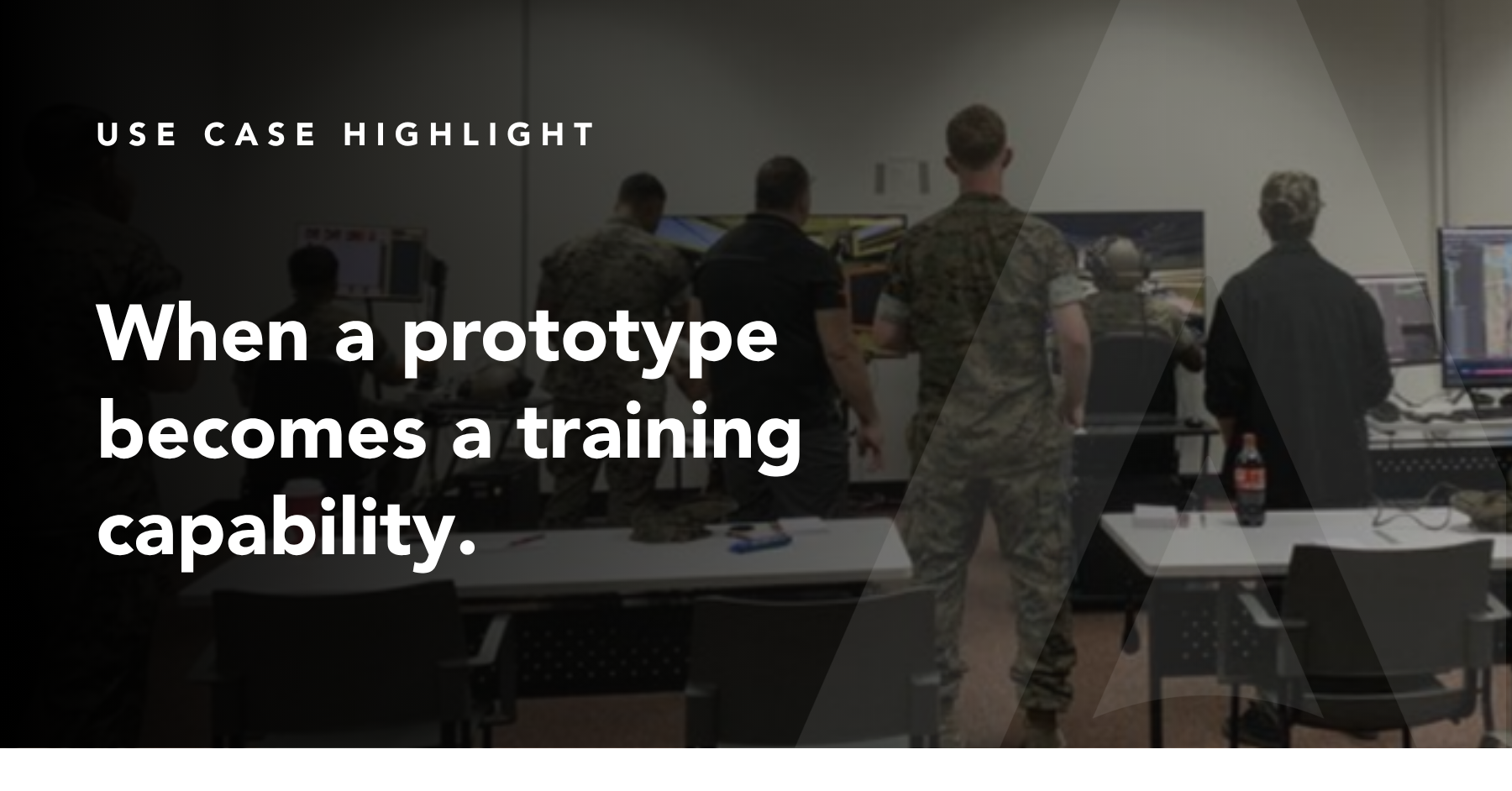
One of the most rewarding moments for any training system developer is when users stop looking to you for answers and start relying on their own skills and experience. We recently witnessed exactly that during a demonstration of the Amphibious Combat Vehicle Crew Gunnery Trainer (CGT) for PM-AAA leadership and the TECOM General. The demonstration was led not by MAK personnel, but by the Marines who will ultimately train with and operate the system, including ACV drivers, gunners, vehicle commanders, and Gunnery Sergeants.
What made the event even more impressive was that the CGT was only six months into development. At this stage, it was still a prototype intended to demonstrate concepts. Yet Marines who had received only brief instructor/operator training were able to independently run scenarios, explain the system, and demonstrate its capabilities without MAK personnel taking the controls.
That outcome was the strongest validation of the program to date. As the developers, we knew every menu, feature, and shortcut, so standing back required trust in both the system we built and the training we delivered. We gave the Marines space to operate, and the result really exceeded expectations.
What stood out most was how naturally they handled the demonstration, despite the added pressure of presenting to senior leadership. While they had rehearsed beforehand, they weren’t just following a script. They confidently guided the audience through a training scenario with a level of coordination and professionalism that surpassed even some of our own demonstrations. At that moment, it stopped feeling like a MAK prototype and started feeling like a Marine Corps training capability.
The demonstration also reinforced something we've heard repeatedly from Marines. While driving and gunnery skills are critical, the greatest benefit is its ability to train crews to communicate, coordinate, and make decisions under pressure. Throughout the demo, the interactions between crew members stood out as much as the simulated engagements themselves. The ability to rehearse those skills in a controlled environment, with immediate repetition and feedback, creates training value that extends beyond vehicle operation.
The flexibility of the CGT plays an important role in that training value. Rather than relying on a fixed set of scenarios, instructors can modify engagements, create new exercises, adjust complexity, and tailor training to specific objectives. After only a short instructor/operator training period, Marines were already demonstrating the ability to adapt scenarios to trainee needs. That flexibility helps keep training relevant and focused on developing judgment, communication, and teamwork rather than memorization.
For MAK, this is one of the clearest indicators of success. A training system creates its greatest value when operators can confidently use it without the developers. Watching Marines independently demonstrate a six-month-old prototype, explain its capabilities, adapt training events, and lead instruction themselves provided tangible evidence that the investment in usability, instructor tools, and scenario generation is paying off.
Beyond the Demo
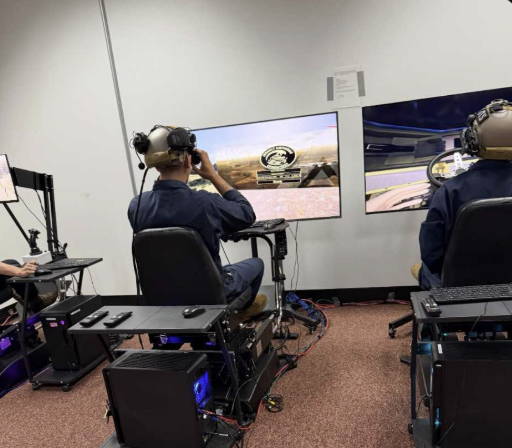
Our original plan was to demonstrate the prototype at Camp Pendleton, gather feedback, and then relocate it to a site where relatively few Marines would have access to it. Instead, PM-AAA elected to leave the system at Camp Pendleton's Schoolhouse Center of Excellence, allowing Marines to continue using it and provide feedback as development progresses.
To us, that decision was a huge vote of confidence. A prototype originally built to demonstrate concepts was now being trusted as a tool Marines could begin incorporating into their training pipeline.
I'll admit, that decision was both exciting and a little intimidating. It meant the prototype would be exposed to daily use, with every strength and weakness visible to the end users. At the same time, there are few better opportunities for a development team to learn. Rather than waiting years for operational feedback, we suddenly had direct access to the Marines who will ultimately rely on the system. More importantly, they could begin training immediately, gaining repetitions and experience that otherwise require operational vehicles, field exercises, ammunition, range availability, and the associated costs and logistics.
The decision also created a powerful feedback loop as the program moves toward production in 2027. Marines are actively using the system and providing observations that shape future improvements. We've received feature requests, suggestions for refining functionality, and even reports of a broken VR mount, all indicators that the system is being used in real-world conditions rather than sitting in a warehouse.
That level of adoption has exceeded what we expected at this stage of the program. What began as a prototype demonstration has evolved into an opportunity to place the system in front of actual users, gather meaningful feedback, and begin delivering training value long before production.